
Shingle roofs are a common choice for homes across Brevard County because they offer reliable protection, a familiar look, and practical value. But even a well-installed shingle roof can wear out faster than expected when small mistakes are ignored. In Florida, roofing materials already face intense sun, heavy rain, high humidity, tropical weather, and strong seasonal winds. When maintenance is delayed or problems are handled incorrectly, a roof’s service life can shorten quickly.
Many homeowners only think about their roof when a leak appears. By then, the damage may have already spread beneath the shingles. The good news is that many roofing problems are preventable with proper care, timely repairs, and the right guidance. Understanding the most common mistakes can help homeowners protect their roof, avoid unnecessary expenses, and make smarter decisions over time.
Ignoring Small Roof Problems
One of the biggest mistakes homeowners make is overlooking small roofing issues. A missing shingle, loose flashing, lifted edge, cracked sealant, or minor stain on the ceiling may not seem urgent at first. But in Brevard County’s climate, small problems can grow fast.
Rain can enter through tiny openings and spread into the underlayment, decking, attic, insulation, and interior walls. Moisture can also linger in hidden areas, especially during humid weather. What starts as a small repair can become a larger roof issue if it is not addressed early.
This is especially important for shingle roofing Brevard County, FL homeowners rely on during storm season. Shingles are designed to overlap and shed water properly. When one section is damaged or displaced, nearby areas can become more vulnerable.
Delaying Regular Roof Inspections
A roof may look fine from the ground while still having hidden problems. Shingles can loosen, granules can wear away, sealants can crack, and flashing can shift without being obvious from the driveway. That is why regular inspections matter.
A professional inspection can identify early signs of wear before they become major concerns. It can also help homeowners understand whether a roof needs simple maintenance, targeted repair, or closer monitoring after severe weather. In a coastal Florida environment, inspections are especially useful after heavy wind, hail, tropical storms, or long periods of intense heat.
Skipping inspections often leads to surprise repairs. Homeowners may not realize damage exists until water enters the home. By scheduling routine evaluations, property owners can stay ahead of problems instead of reacting to emergencies.
Letting Debris Sit on the Roof
Leaves, branches, pine needles, and other debris may seem harmless, but they can shorten the life of a shingle roof. When debris collects in valleys, gutters, or around roof penetrations, it can trap moisture against roofing materials. Over time, that moisture can contribute to shingle deterioration and drainage problems.
Debris can also block water flow. If rainwater cannot move off the roof properly, it may back up beneath shingles or spill into areas not designed to handle constant moisture. Clogged gutters can create similar issues by allowing water to overflow near fascia, soffits, and roof edges.
Keeping the roof and gutters clear supports better drainage and helps reduce unnecessary wear. Homeowners should be cautious about climbing onto the roof themselves, but professional maintenance can safely remove debris and check for related damage.
Overlooking Attic Ventilation
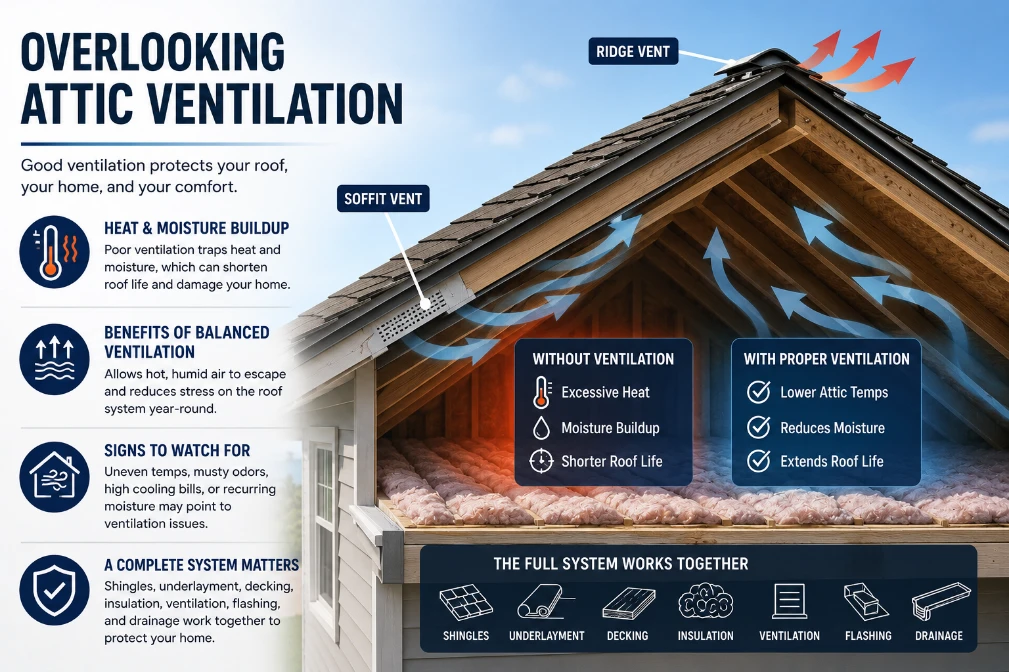
Roof life is not only affected by what happens outside. Attic ventilation also plays an important role. Poor ventilation can trap heat and moisture beneath the roof system. During Florida’s hot seasons, excess attic heat can contribute to shingle aging. Moisture buildup can also create conditions that affect decking, insulation, and indoor comfort.
When ventilation is balanced, hot and humid air has a better path out of the attic. This helps reduce stress on the roof system and supports better overall performance. If a home has uneven temperatures, musty attic odors, high cooling strain, or recurring moisture concerns, ventilation may be worth evaluating.
A roof inspection should consider the full system, not just the visible shingles. Shingles, underlayment, decking, insulation, ventilation, flashing, and drainage all work together to protect the home.
Choosing Quick Fixes Instead of Proper Repairs
Temporary fixes can be tempting, especially when a leak appears suddenly. However, quick patches, improper sealants, mismatched materials, or incomplete repairs can lead to more problems later. A repair should address the source of the issue, not just the visible symptom.
For example, applying sealant over a leak area may not solve the underlying problem if flashing has failed or shingles are damaged nearby. Replacing one visible shingle may not be enough if moisture has reached the decking beneath it. Proper repairs require a careful look at the surrounding roof system.
DC Roofing Inc. helps homeowners identify the real cause of roofing problems so repairs are made correctly. This protects the roof’s performance and helps prevent repeat issues.
Walking on the Roof Without Care
Walking on shingles can cause damage, especially when the roof is hot, aging, wet, or already worn. Foot traffic can loosen granules, crack shingles, bend edges, or stress weak areas. Homeowners may climb onto the roof to clean debris, hang decorations, inspect storm damage, or check for leaks, but doing so can create new problems.
Professional roofers understand how to move safely across roofing surfaces and identify areas that should not be walked on. They also have the equipment and training to inspect the roof without causing unnecessary wear. For homeowners, staying off the roof is often the safer and smarter choice.
Waiting Too Long After Storms
Brevard County storms can damage shingles even when the roof does not leak right away. Wind can lift shingles, loosen fasteners, damage flashing, and weaken sealed edges. Flying debris can bruise or tear shingles. Heavy rain can reveal drainage problems or expose vulnerable roof transitions.
After severe weather, it is wise to have the roof checked. Waiting until water enters the home may allow hidden storm damage to worsen. A timely inspection can help document roof condition, identify repairs, and give homeowners peace of mind before the next weather event.
This type of roof maintenance Brevard County homeowners schedule after storms can make a major difference in long-term roof performance.
Forgetting About Flashing and Roof Penetrations
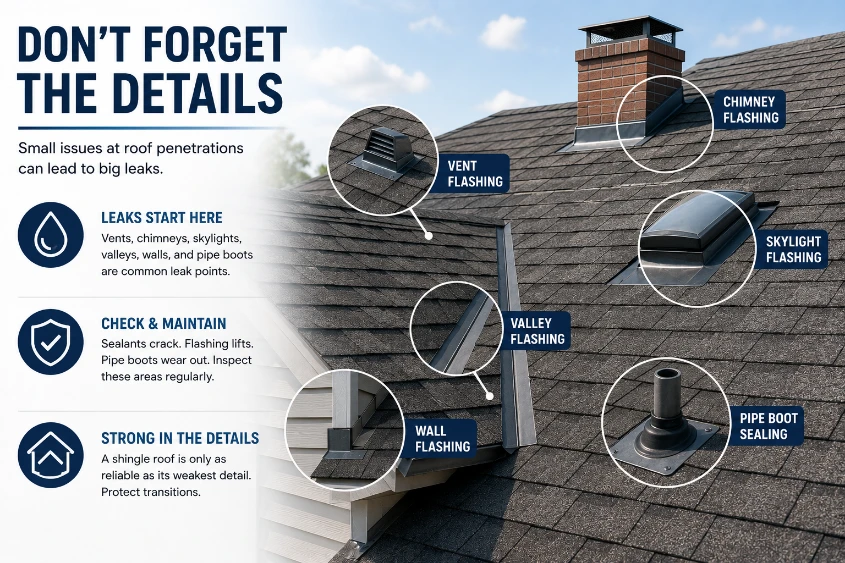
Many leaks begin around roof penetrations and transitions. Areas around vents, chimneys, skylights, valleys, walls, and pipe boots need proper flashing and sealing. If these details fail, water can enter even when the shingles themselves look acceptable.
Sealants can crack with age. Pipe boots can deteriorate under sun exposure. Flashing can lift or separate during storms. These details should be checked during routine inspections because they are often the first places where roof problems begin.
A shingle roof is only as reliable as its weakest detail. Protecting these transition areas helps extend the life of the entire system.
Skipping Preventive Maintenance
Preventive care helps homeowners avoid expensive surprises. It includes checking shingles, clearing debris, reviewing drainage, inspecting flashing, monitoring attic conditions, and repairing small issues early. Roof maintenance Brevard County property owners invest in is especially valuable because local roofs deal with heat, humidity, rain, and storm exposure year after year.
Preventive maintenance does not mean overworking the roof or making unnecessary repairs. It means understanding the roof’s condition and taking practical steps to protect it. With the right approach, homeowners can get more life out of their roofing system and reduce the chance of sudden leaks.
FAQs About Shingle Roofing
Why is shingle roofing Brevard County, FL more vulnerable to early wear?
Shingle roofs in Brevard County face strong sun, humidity, heavy rain, tropical storms, and wind exposure. These conditions can wear down granules, loosen shingles, crack sealants, and stress flashing over time. Proper installation, routine inspections, and timely repairs help reduce early aging and protect the roof’s service life.
How often should a shingle roof be inspected?
A shingle roof should generally be inspected at least once a year and after major storms. Regular inspections help identify lifted shingles, missing granules, damaged flashing, worn sealant, clogged drainage areas, and early leak risks before they become larger problems. This is especially important in Florida’s demanding weather conditions.
Can small shingle roof issues really lead to major damage?
Yes, small issues can become serious when they allow water into the roofing system. A missing shingle, cracked pipe boot, loose flashing, or minor storm damage can let moisture reach the underlayment, decking, attic, and interior finishes. Early repair is usually simpler and less disruptive than waiting for visible leaks.
Avoid Costly Mistakes With DC Roofing Inc.’s Shingle Roofing Brevard County, FL Guidance
Your shingle roof protects your home every day, but Florida weather can be tough on even a strong roofing system. Small mistakes like delaying inspections, ignoring debris, overlooking flashing, or choosing temporary repairs can shorten your roof’s life and increase long-term costs.
DC Roofing Inc. helps Brevard County homeowners protect their roofs with professional inspections, honest recommendations, and dependable repair guidance. If you are unsure about your roof’s condition, now is the right time to take action.
Contact DC Roofing Inc. today to schedule a roof evaluation and keep your home protected through every season.


