
For businesses in Melbourne Beach, energy efficiency is a serious operating cost issue. Between intense sun, humidity, salt air, and long cooling seasons, commercial buildings along the Space Coast need roofing systems that do more than keep rain out.
A roof is one of the largest surfaces exposed to Florida’s climate every day. When insulation is weak, damaged, or missing, heat can move into the building more easily. That forces cooling systems to work harder, increases energy costs, and can create uneven indoor temperatures for employees, customers, and tenants.
Better insulation helps slow heat transfer through the roof. It supports steadier indoor comfort, reduces cooling strain, and helps the building perform more efficiently over time.
Why Roof Insulation Matters for Local Businesses
Melbourne Beach businesses operate in a climate where heat and moisture are constant concerns. Commercial buildings absorb solar heat throughout the day, especially during peak afternoon hours. If the roofing system lacks adequate insulation, much of that heat can transfer into the interior.
This can make offices, retail spaces, restaurants, and service-based businesses harder to cool. Air conditioning systems may run longer while still struggling to keep temperatures consistent.
That is why commercial roof insulation Melbourne Beach property owners rely on should be viewed as part of the full roofing system. Proper insulation creates a thermal barrier between the hot exterior roof surface and the cooled interior space. This can help reduce energy waste and improve comfort throughout the building.
How Heat Moves Through a Commercial Roof
Heat naturally moves from warmer areas to cooler areas. In Florida, the roof surface absorbs sunlight, heats up, and transfers that heat downward. Flat and low-slope commercial roofs can be especially affected because they receive long hours of direct sun exposure.
Dark materials, aging membranes, damaged coatings, gaps in insulation, wet insulation, and poorly sealed penetrations can all make heat transfer worse. When this happens, the HVAC system must remove more heat from the building.
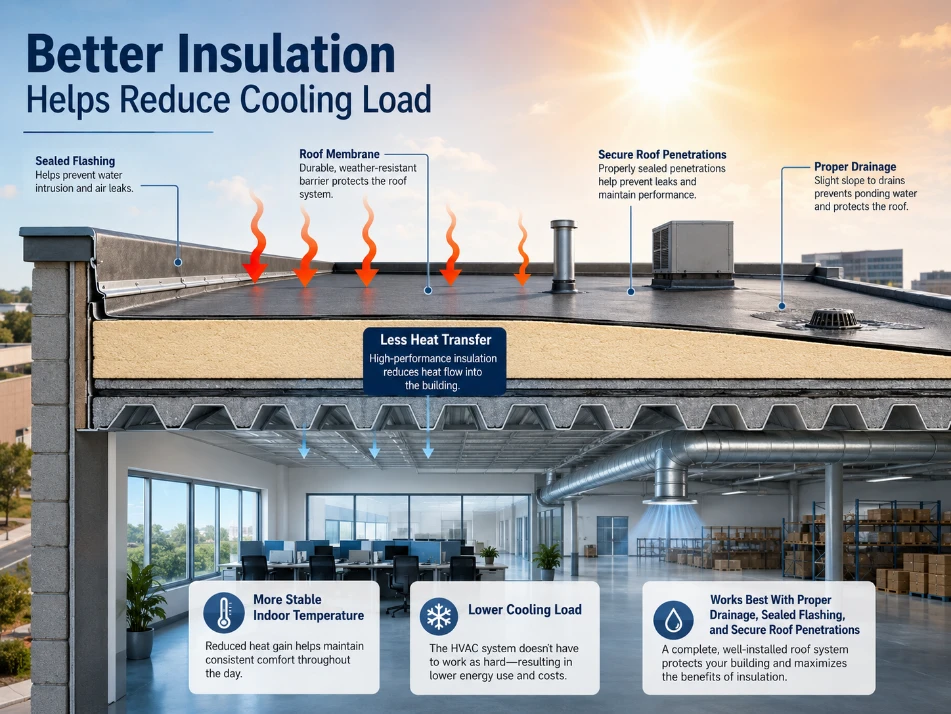
Insulation helps control how quickly heat enters. It does not stop heat completely, but it helps reduce the cooling load placed on the building. Over time, that can support lower utility costs and less strain on cooling equipment.
Better Insulation Helps Reduce Cooling Load
Cooling load is the amount of cooling needed to keep a building comfortable. When a roof allows too much heat into the building, the cooling load increases.
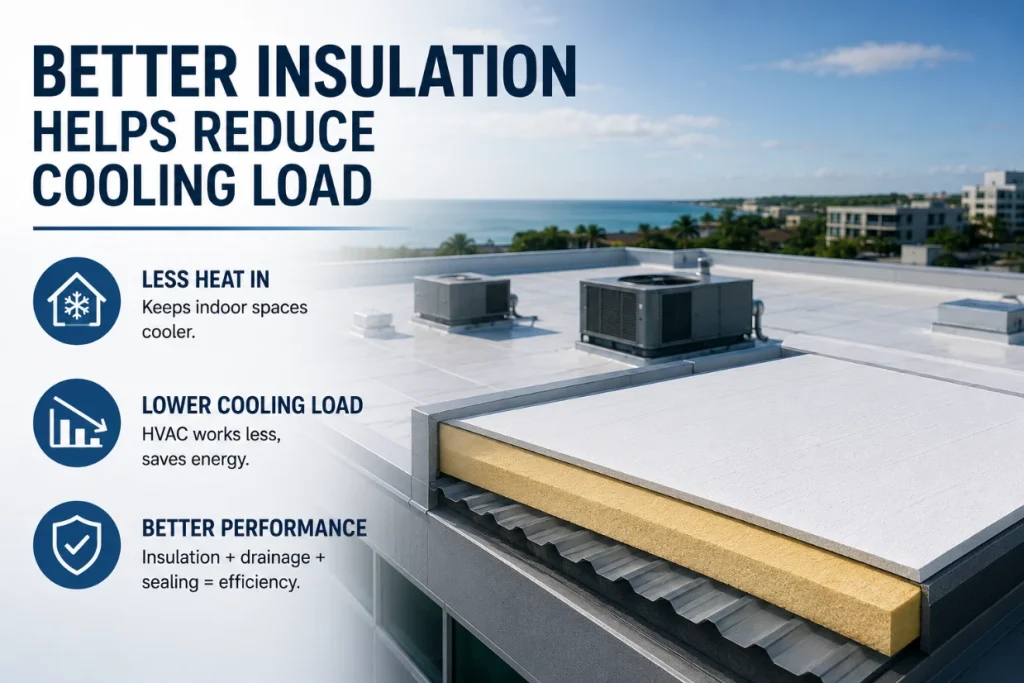
Better insulation can help lower that demand. Instead of allowing the interior to heat up quickly during the hottest parts of the day, a properly insulated roof helps maintain a more stable indoor environment.
This matters for businesses because energy costs are ongoing. A building owner may not immediately connect high utility bills to the roof, but roof performance can directly affect how hard the HVAC system has to work.
When insulation is combined with proper drainage, sealed flashing, secure roof penetrations, and well-maintained roofing materials, the building can perform more efficiently.
Insulation Also Supports Moisture Control
In Melbourne Beach, moisture is just as important as heat. Humid air, heavy rain, tropical systems, and coastal exposure can all affect roof performance. If moisture enters the roofing system, insulation can lose effectiveness.
Wet insulation does not perform like dry insulation. Once insulation absorbs moisture, it may allow more heat transfer and contribute to additional roof problems. Trapped moisture can also lead to interior stains, recurring leaks, and deterioration of roofing components.
This is why insulation should not be evaluated on its own. A roof may have insulation in place, but if the membrane, seams, flashing, or drainage system is failing, the insulation may not be protecting the building properly.
A professional inspection can help determine whether insulation is dry, effective, and supported by a sound roofing system.
Signs Your Roof May Be Affecting Energy Costs
A commercial roof does not always show obvious signs when insulation is underperforming. Often, the first clues appear inside the building.
Uneven temperatures, rising utility bills, warm upper-floor spaces, musty odors, ceiling stains, and air conditioning systems that run constantly may all point to roof-related energy loss. Recurring leaks can also be a warning sign that moisture has reached insulation or other roof components.
These issues do not always mean insulation is the only problem, but they should not be ignored. A roof that looks fine from the ground may still have hidden gaps, trapped moisture, damaged materials, or weak points affecting performance.
The Role of Professional Roof Assessment
Improving insulation starts with understanding the condition of the entire roof. Not every building needs the same solution. Some properties may benefit from added insulation during a roof replacement. Others may need moisture repairs, better sealing, improved drainage, or replacement of damaged roof sections.
A professional assessment looks at the roof surface, flashing, penetrations, drainage, insulation condition, roof age, and signs of moisture intrusion. For coastal properties, wind exposure, salt air, and storm readiness should also be considered.
DC Roofing Inc. helps business owners evaluate roof performance with local conditions in mind. The goal is not simply to add insulation. The goal is to identify where the building is losing efficiency and determine which roofing improvements make practical sense.
Long-Term Value Beyond Utility Savings
Lower energy costs are a major benefit of better insulation, but they are not the only advantage. A more efficient roof can also improve comfort, reduce HVAC strain, and support better long-term building performance.
Comfort matters in commercial spaces. Customers, employees, and tenants all benefit from a building that feels consistent and well maintained. Better insulation can also support roof longevity when paired with proper installation, repair, and moisture control.
For Melbourne Beach businesses, this is especially important because roofs face constant exposure to sun, humidity, rain, wind, and coastal air. A stronger roofing assembly helps the property stay better prepared for everyday conditions and seasonal storms.
Planning Roof Improvements With Energy Efficiency in Mind
Business owners often think about roofing only when there is a leak or visible damage. While those concerns should be addressed quickly, energy performance should also be part of the conversation.
If utility bills are rising, indoor comfort is inconsistent, or the roof is nearing the end of its service life, insulation should be evaluated. If the building has experienced leaks, the condition of the insulation should also be checked.
Some businesses may need commercial roof insulation Melbourne Beach upgrades as part of a replacement project. Others may only need repairs that protect existing insulation from heat and moisture damage.
DC Roofing Inc. works with commercial property owners to identify practical roofing solutions that support protection, performance, and long-term value.
FAQs About Commercial Roofing
Why should business owners care about commercial roofing Melbourne Beach performance?
Business owners should care because the roof affects more than exterior protection. It can influence indoor comfort, cooling demand, moisture control, and long-term property costs. In a coastal Florida climate, a poorly performing roof may allow heat and humidity to place added strain on the building, which can lead to higher energy use and more frequent maintenance concerns.
Can roof insulation really lower energy costs for a business?
Yes, roof insulation can help lower energy costs by slowing heat transfer into the building. When less heat enters through the roofing system, the air conditioning system does not have to work as hard to maintain comfortable indoor temperatures. The amount of savings depends on the building, roof condition, insulation quality, and overall HVAC performance.
How do I know if my commercial roof insulation is failing?
Possible signs include rising utility bills, uneven indoor temperatures, HVAC systems running constantly, ceiling stains, recurring leaks, or musty odors. Insulation may lose performance if it becomes wet, compressed, or damaged. A professional roof inspection can help determine whether insulation is still functioning properly.
Is insulation only important during a roof replacement?
Insulation is often reviewed during roof replacement because that is when the roof assembly is easiest to access. However, it can also matter during repairs, leak investigations, energy-efficiency planning, and maintenance inspections. If a business has comfort problems or rising cooling costs, the roof and insulation should be evaluated.
Protect Your Property With DC Roofing Inc.’s Commercial Roofing Melbourne Beach Services
Energy efficiency starts with a roofing system built for local conditions. Better insulation can help reduce cooling strain, improve indoor comfort, and support long-term building performance.
DC Roofing Inc. understands the demands Melbourne Beach businesses face, from intense sun exposure to coastal moisture and seasonal storms. If your building has rising energy costs, uneven temperatures, or roof performance concerns, now is the time to take a closer look.
Contact DC Roofing Inc. to schedule a commercial roof evaluation and protect your property with roofing solutions designed for Florida’s coastal climate.


