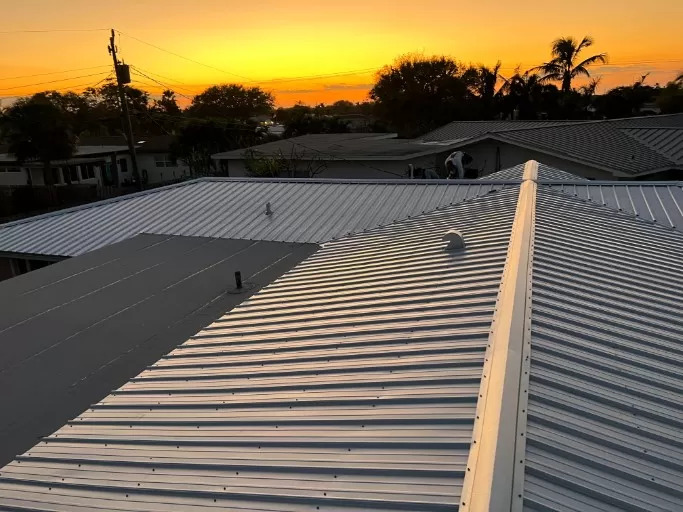
Metal roofs are a smart choice for many Satellite Beach homeowners because they offer durability, energy efficiency, and strong performance in Florida’s coastal climate. Still, even the best metal roofing system needs regular care. Salt air, heavy rain, humidity, strong sun, and seasonal storms can all affect panels, fasteners, sealants, flashing, and protective coatings over time.
Good maintenance helps homeowners catch small concerns before they turn into leaks, corrosion, or costly repairs. With the right approach to metal roof maintenance Florida homeowners can protect their investment, extend roof life, and keep their home better prepared for coastal weather.
Why Metal Roof Maintenance Matters for Satellite Beach Homes
Satellite Beach homes are exposed to conditions that can wear down exterior materials faster than homes located farther inland. A metal roof may be strong, but it still depends on properly secured panels, sealed fasteners, clean drainage areas, and intact coatings.
Maintenance matters because small issues often begin quietly. A loose fastener may allow minor movement. A small scratch may expose metal beneath the coating. A weak sealant line may let water enter during wind-driven rain. These issues may not cause immediate damage, but repeated exposure can make them worse.
For homeowners, regular maintenance is not just about appearance. It helps protect the roof system, attic, insulation, ceiling materials, and overall property value.
How Florida’s Coastal Climate Affects Metal Roofing
Florida’s coastal climate is one of the main reasons metal roofs need steady attention. Salt in the air can settle on roofing surfaces and metal components. Over time, that exposure can contribute to corrosion if the roof is not properly maintained.
Satellite Beach also experiences intense sunlight. Heat causes roofing materials to expand during the day and contract as temperatures cool. This movement can affect fasteners, seams, and sealants. Heavy rain and tropical weather add more stress, especially when water is pushed by wind.
These conditions do not mean metal roofing is a poor choice. They simply mean homeowners should understand how the local climate affects the roof and take preventive steps before damage develops.
Check for Loose Fasteners and Panel Movement
Fasteners play a critical role in keeping metal roof panels secure. Over time, wind, temperature changes, and natural roof movement can cause fasteners to loosen or back out slightly. When this happens, small gaps may form around washers or attachment points.
Panel movement can also signal a problem. Metal panels should remain properly aligned and secure. If panels appear lifted, shifted, or uneven, the roof should be inspected by a professional.
Homeowners should avoid walking on the roof to check these details themselves. Metal roofing can be slippery, especially after rain or in humid weather. A professional inspection is the safest way to identify fastener or panel concerns.
Watch for Rust, Corrosion, and Salt Air Damage
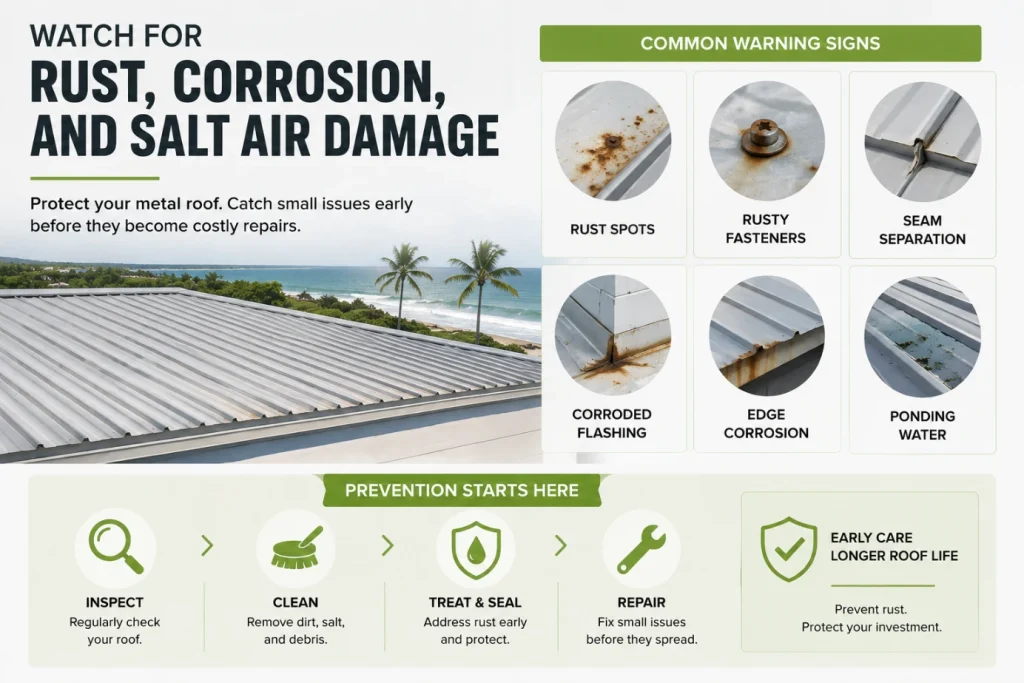
Rust is one of the biggest warning signs on any metal roofing system. Modern metal roofs are designed with protective coatings, but scratches, exposed edges, worn finishes, and damaged fasteners can create vulnerable spots.
Salt air can make these issues worse in coastal communities. This is why rust prevention roofing should be part of a homeowner’s maintenance mindset. Small rust spots should not be ignored, especially near fasteners, seams, flashing, roof edges, or areas where water tends to sit.
Prevention starts with regular inspections and proper care. If corrosion is found early, a roofing professional may be able to clean, treat, seal, or repair the affected area before it spreads.
Keep Gutters and Roof Valleys Clear of Debris
Debris buildup can create serious problems for metal roofs. Leaves, branches, palm fronds, sand, and other debris can collect in gutters, valleys, and roof transitions. When water cannot drain properly, it may back up beneath roof edges or sit against vulnerable materials.
Clogged gutters can also cause overflow near fascia, soffits, siding, and foundation areas. In heavy Florida rain, drainage problems can develop quickly.
Homeowners should keep gutters and downspouts clear and make sure water flows away from the home. Roof valleys should also be checked for debris after storms. Clear drainage areas help reduce moisture exposure and support better roof performance.
Inspect Flashing Around Roof Edges, Vents, and Chimneys
Flashing protects areas where the roof meets another surface or object. These areas include roof edges, vents, chimneys, skylights, walls, and other penetrations. If flashing becomes loose, bent, corroded, or poorly sealed, water can enter even when the metal panels remain in good condition.
In Satellite Beach, flashing may experience extra wear from wind, salt air, and rain. Sealants around flashing can also dry out or separate over time.
During a professional inspection, flashing should be carefully evaluated. Repairing weak flashing early can prevent water intrusion, ceiling stains, and hidden moisture damage.
Look for Scratches, Dents, and Surface Coating Wear
Metal roof coatings help protect panels from moisture, UV exposure, and corrosion. When the coating is scratched or worn, the metal beneath may become more vulnerable.
Scratches can happen from storm debris, tree branches, dropped tools, or improper roof access. Dents may occur from falling limbs or windblown objects. While some surface marks may be cosmetic, others can affect long-term roof performance.
A roof with fading, chalking, scratches, or exposed metal should be inspected. Professional roofers can determine whether the issue needs cleaning, coating repair, panel repair, or further evaluation.
Clean the Roof Surface Safely and Properly
Keeping a metal roof clean helps reduce buildup from salt, dirt, pollen, leaves, and organic debris. However, cleaning must be done carefully. Harsh chemicals, abrasive tools, and pressure that is too strong can damage coatings or force water into roof seams.
For roof cleaning Florida coastal homes often need, the goal is to remove buildup without harming the roof surface. Gentle cleaning methods and proper products matter. Homeowners should also avoid climbing onto the roof without safety equipment and experience.
Professional cleaning may be the best option when debris is heavy, stains are widespread, or the roof is steep. Proper roof cleaning Florida coastal homes rely on can help preserve both appearance and performance.
Check Sealants Before Heavy Rain and Storm Season
Sealants are used around flashing, fasteners, seams, penetrations, and roof transitions. Over time, sealants can crack, shrink, separate, or lose flexibility. When that happens, wind-driven rain can find its way into small openings.
Before heavy rain and storm season, sealants should be checked for signs of wear. This is especially important in Satellite Beach, where summer storms and tropical systems can bring intense rain.
A professional roofer can identify weak sealant areas and repair them with the correct materials. Using the wrong sealant or applying it over damaged areas may only provide a temporary fix.
Trim Nearby Trees to Reduce Roof Damage
Trees can provide shade and curb appeal, but branches hanging over a metal roof can create problems. Limbs can scratch panels, drop leaves into valleys, and break during strong winds. Palm fronds and branches can also block gutters or collect near roof edges.
Tree trimming helps reduce roof damage and supports better drainage. Branches should be kept away from the roof surface to prevent scraping during windy conditions.
Homeowners should also remove storm debris promptly. Even small debris can trap moisture against the roof surface if left in place for too long.
Schedule Inspections After Strong Winds or Coastal Storms
After strong winds or coastal storms, homeowners should look for signs of roof damage from the ground. Lifted panels, loose trim, displaced flashing, debris impact marks, or gutter damage may indicate the roof needs attention.
A professional inspection is especially important after severe weather. Some damage is not visible from the ground, and small defects may only leak during the next storm.
A reliable roof inspection schedule Florida homeowners follow should include routine seasonal inspections and additional checks after major weather events. This gives homeowners a better chance of finding issues before they become expensive.
Know When Minor Metal Roof Issues Need Professional Repair
Not every roofing concern requires major work, but minor issues should still be taken seriously. Loose fasteners, small rust spots, damaged flashing, worn sealant, and surface scratches can often be repaired when caught early.
Waiting too long can allow water to enter the roof system or allow corrosion to spread. Professional repair is important because metal roofing requires the right materials, attachment methods, and sealants.
DIY fixes can sometimes make problems worse, especially if the wrong products are used. A qualified roofer can determine whether the issue is cosmetic, isolated, or connected to a larger roof concern.
Create a Seasonal Metal Roof Maintenance Plan
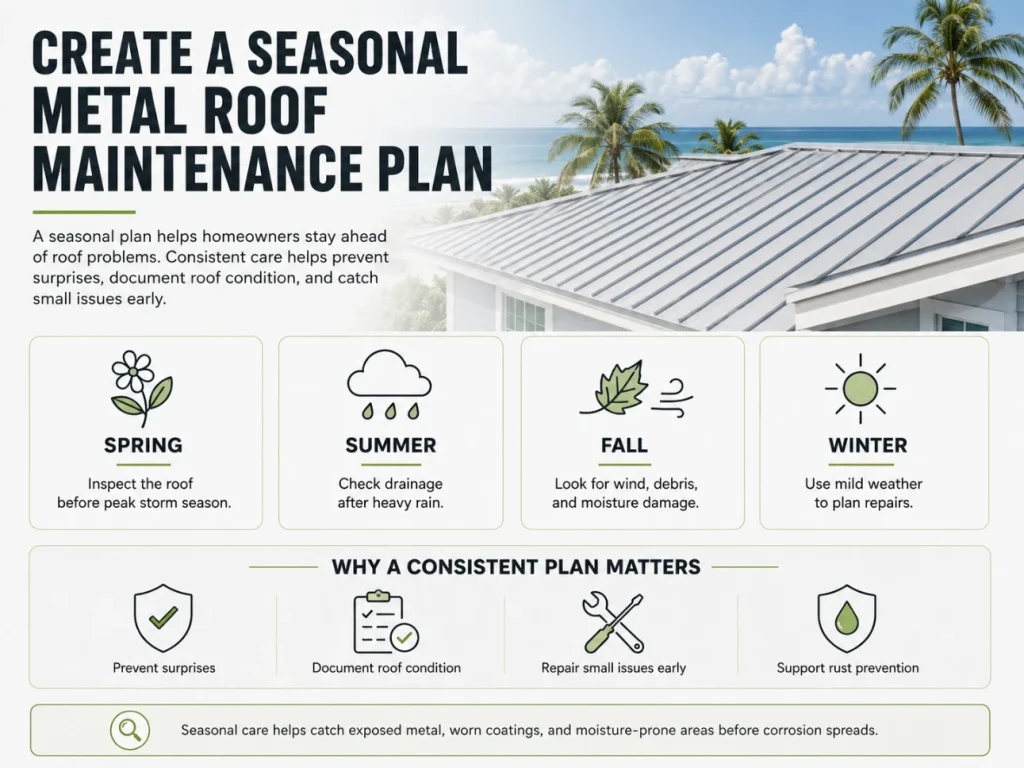
A seasonal maintenance plan helps homeowners stay ahead of roof problems. In spring, it is smart to inspect the roof before the heaviest storm activity begins. In summer, homeowners should monitor drainage after heavy rain. In fall, post-storm checks can help identify damage from wind, debris, or repeated moisture. In winter, mild weather may be a good time to plan repairs.
A strong roof inspection schedule Florida property owners can maintain should be consistent and realistic. The goal is to prevent surprises, document roof condition, and handle small problems while they are easier to repair.
Seasonal care also supports rust prevention roofing by helping homeowners catch exposed metal, worn coatings, and moisture-prone areas before corrosion becomes widespread.
Protect Your Investment with Metal Roof Maintenance Florida Homeowners Can Trust from DC Roofing Inc.
A metal roof is a long-term investment, but it still needs proper care to perform well in Satellite Beach’s coastal environment. Regular inspections, safe cleaning, debris removal, sealant checks, and timely repairs all help protect your home from leaks, corrosion, and storm-related damage.
DC Roofing Inc. helps local homeowners understand the condition of their roof and address concerns before they become costly. With the right maintenance plan, your metal roof can continue protecting your home through Florida heat, humidity, rain, and coastal storms.
FAQs About Metal Roof Maintenance in Florida
How often should a metal roof be inspected in Satellite Beach?
A metal roof should generally be inspected at least once or twice a year, with additional inspections after strong winds, heavy rain, or tropical storms. Satellite Beach’s coastal climate can speed up wear on fasteners, flashing, sealants, and coatings, so routine inspections help catch small issues before they lead to leaks or corrosion.
Can salt air damage a metal roof?
Yes, salt air can contribute to corrosion over time, especially if protective coatings are scratched, worn, or damaged. Metal roofs are built to handle tough conditions, but coastal homes still need maintenance. Regular cleaning, inspections, and prompt repairs can help reduce the impact of salt exposure and protect vulnerable roof components.
Is it safe for homeowners to clean their own metal roof?
Homeowners can handle some basic maintenance from the ground, such as clearing nearby debris or checking gutters, but walking on a metal roof can be dangerous. Metal panels may be slippery, steep, or easy to damage if stepped on incorrectly. Professional cleaning is often safer and helps avoid coating damage or water intrusion from improper methods.
What signs show that a metal roof needs repair?
Warning signs include loose fasteners, lifted panels, rust spots, damaged flashing, cracked sealants, dents, scratches, leaks, or visible coating wear. Homeowners should also watch for ceiling stains or moisture after storms. Even small problems should be inspected because coastal weather can make minor roof damage worse quickly.
Trust DC Roofing Inc. for Metal Roof Maintenance Florida Homeowners Shouldn’t Delay
Your metal roof protects your home from Satellite Beach’s harsh sun, salt air, heavy rain, and coastal storms, but small problems can grow fast when maintenance is delayed. Loose fasteners, worn sealants, rust spots, clogged gutters, and damaged flashing should be addressed before they lead to leaks or expensive repairs.
DC Roofing Inc. provides professional metal roof inspections, maintenance, and repair solutions for homeowners who want dependable protection and clear answers. Contact DC Roofing Inc. today to schedule your metal roof inspection and keep your Satellite Beach home protected season after season.