Commercial property owners in Florida face a unique challenge when it comes to roofing. The combination of intense sun, high humidity, heavy rainfall, and seasonal storms creates an environment that can significantly impact durability over time. Understanding the commercial roof lifespan Florida buildings can realistically achieve is essential for protecting your investment, planning maintenance, and avoiding unexpected disruptions.
The lifespan of a commercial roof is not determined by a single factor. It depends on the type of material, the quality of installation, ongoing maintenance, and how well the system is designed to handle Florida’s climate. By exploring the lifespan of common roofing systems, property owners can make more informed decisions about when to repair, replace, or upgrade their roofs.
Why Florida’s Climate Impacts Roof Lifespan
Florida’s weather conditions are demanding on all roofing systems, but commercial roofs often face even greater exposure due to their size and structure. Prolonged UV exposure can cause materials to degrade more quickly, while humidity contributes to moisture buildup that may lead to mold or structural issues. Heavy rains and strong winds during storm season place additional stress on roofing systems.
These factors directly influence the commercial roof lifespan Florida property owners experience. Even high-quality materials can underperform if they are not properly maintained or installed with Florida’s conditions in mind. That is why selecting the right roofing type and working with experienced professionals is critical.
Understanding Flat Roof Life Expectancy in Florida
Flat and low-slope roofs are among the most common choices for commercial properties. They offer practical benefits such as easier installation of HVAC systems and cost-effective coverage for large buildings. However, they also require careful attention due to drainage challenges and constant exposure to the elements.
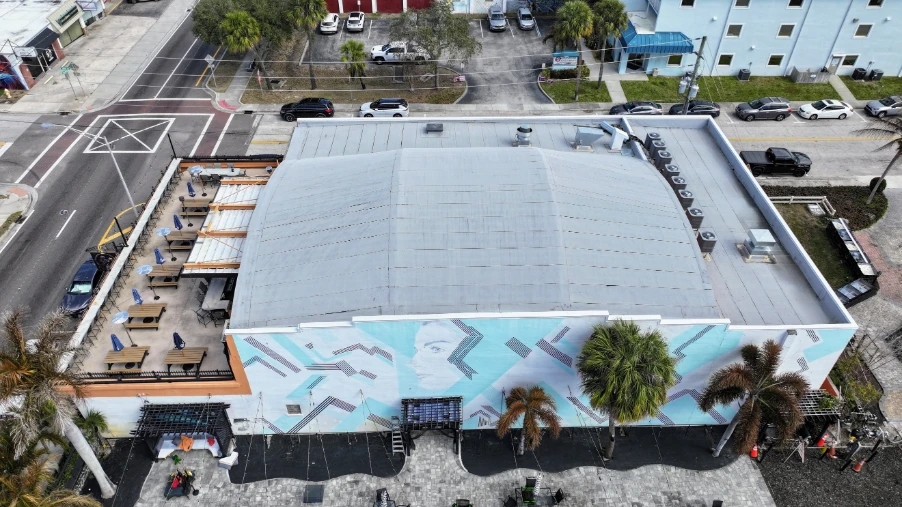
The flat roof life expectancy Florida property owners can expect varies depending on the materials used. Systems such as built-up roofing, modified bitumen, and single-ply membranes each have their own performance characteristics. In general, flat roofs tend to have shorter lifespans than sloped systems, particularly if water is allowed to pool or maintenance is neglected.
Proper drainage design, routine inspections, and timely repairs can significantly extend the life of a flat roof. Without these measures, even a well-installed system may experience premature wear. Understanding the realistic flat roof life expectancy Florida buildings face helps property owners plan for long-term maintenance and replacement.
TPO Roofing and Its Lifespan in Florida
Thermoplastic polyolefin, commonly known as TPO, has become a popular choice for commercial roofing due to its energy efficiency and cost-effectiveness. Its reflective surface helps reduce heat absorption, which can be beneficial in Florida’s hot climate.
When considering how long does TPO roof last Florida property owners should take into account both environmental conditions and maintenance practices. A properly installed TPO roof can provide reliable performance for many years, but exposure to UV radiation and temperature fluctuations can gradually affect its durability.
Regular inspections are essential to identify signs of wear, such as seam separation or membrane degradation. Addressing these issues early helps extend the lifespan and maintain the roof’s performance. For many commercial properties, understanding how long does TPO roof last Florida conditions allow is key to planning maintenance schedules and budgeting for future replacement.
Metal Roofing for Commercial Properties
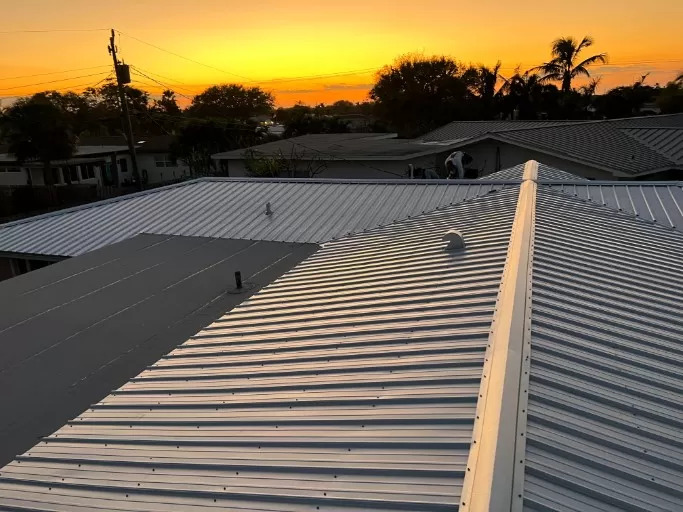
Metal roofing is known for its durability and long-term performance, making it an attractive option for commercial buildings in Florida. It is designed to withstand harsh weather conditions, including high winds and heavy rain, while offering excellent resistance to corrosion when properly treated.
The metal roof lifespan commercial Florida property owners can expect is often longer than many other roofing systems. This extended lifespan makes metal roofing a valuable investment, particularly for businesses looking to reduce long-term maintenance costs.
However, the performance of a metal roof depends on proper installation and regular upkeep. Protective coatings, secure fastening, and routine inspections all play a role in maintaining its integrity. When evaluating the metal roof lifespan commercial Florida buildings can achieve, it is important to consider both the material quality and the expertise of the installation team.
Factors That Influence Commercial Roof Longevity
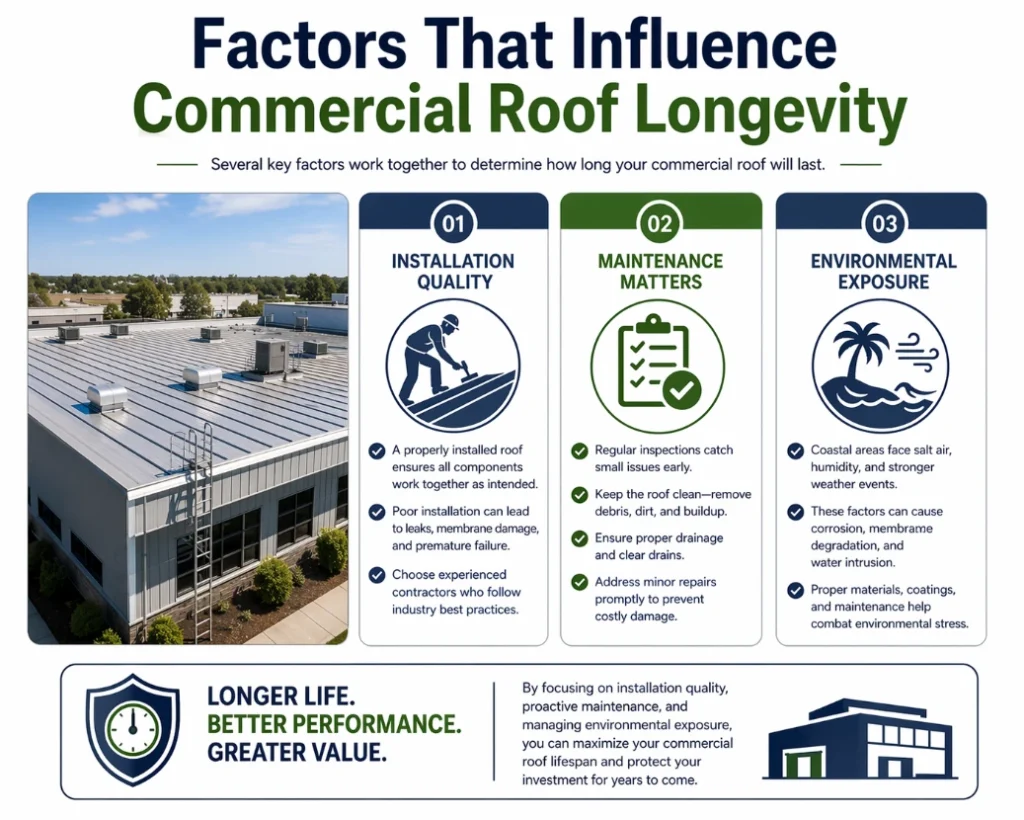
While material type is a major factor, several additional elements influence how long a commercial roof will last. Installation quality is one of the most critical components. A poorly installed roof can fail prematurely, regardless of the material used.
Maintenance is equally important. Regular inspections help identify small issues before they develop into larger problems. Cleaning debris, ensuring proper drainage, and addressing minor repairs all contribute to extending the roof’s lifespan.
Environmental exposure also plays a role. Buildings located near the coast may experience additional challenges due to salt air and increased moisture levels. These conditions can impact the commercial roof lifespan Florida property owners experience if not properly managed.
Planning for Roof Replacement
Understanding the expected lifespan of your roof allows for better long-term planning. Rather than waiting for visible damage or leaks, proactive replacement helps avoid disruptions to business operations and costly emergency repairs.
Property owners should monitor the condition of their roof over time and work with professionals to assess its performance. Knowing when a roof is approaching the end of its lifespan provides an opportunity to explore new materials and technologies that may offer improved durability and efficiency.
By staying informed about the commercial roof lifespan Florida buildings can achieve, business owners can make strategic decisions that protect their property and reduce long-term costs.
The Value of Preventative Maintenance
Preventative maintenance is one of the most effective ways to extend the life of a commercial roof. Scheduled inspections allow professionals to identify potential issues early and recommend appropriate solutions.
Maintenance plans often include checking seams, inspecting flashing, and ensuring drainage systems are functioning properly. These routine efforts help preserve the integrity of the roof and prevent costly damage.
For property owners, investing in maintenance is a practical way to maximize the return on their roofing investment. It also provides peace of mind, knowing that the roof is being properly cared for throughout its lifespan.
Choosing the Right Roofing System
Selecting the right roofing system involves balancing cost, performance, and longevity. Each material offers unique benefits, and the best choice depends on the specific needs of the building.
Flat roofs provide practicality and cost efficiency, while TPO offers energy savings and flexibility. Metal roofing delivers long-term durability and resilience. Understanding how these options perform in Florida’s climate helps property owners make informed decisions.
Working with experienced professionals ensures that the chosen system is properly installed and designed to handle local conditions. This approach helps maximize the commercial roof lifespan Florida property owners expect.
FAQs About Commercial Roof Lifespan in Florida
What is the average commercial roof lifespan in Florida?
The lifespan varies depending on the material and maintenance practices, but most commercial roofs in Florida can last anywhere from 15 to 40 years. Factors such as weather exposure, installation quality, and regular upkeep all influence longevity.
How long does TPO roof last Florida conditions?
A TPO roof can last several decades when properly installed and maintained. However, Florida’s intense sun and heat can affect its durability over time, making regular inspections essential.
What is the metal roof lifespan commercial Florida buildings can expect?
Metal roofing is one of the longest-lasting options, often providing decades of reliable performance. Its durability makes it a strong choice for commercial properties in Florida.
What is the flat roof life expectancy Florida property owners should plan for?
Flat roofs typically have shorter lifespans than sloped systems, but proper maintenance and drainage can significantly extend their performance.
How can I extend the life of my commercial roof?
Regular inspections, timely repairs, proper drainage, and working with experienced contractors all help extend the life of a commercial roofing system.
Stay Ahead of Repairs With Commercial Roof Lifespan Florida Support from DC Roofing Inc.
Understanding your roof’s lifespan is the first step toward protecting your property and avoiding costly surprises. DC Roofing Inc. provides expert inspections, maintenance, and replacement services designed specifically for Florida’s demanding climate.
Our team works closely with commercial property owners to assess roof conditions, recommend solutions, and develop long-term strategies that maximize performance. Whether you are planning for future replacement or need immediate support, we are here to help.
Contact DC Roofing Inc. today to learn more about how we can help you stay ahead of repairs and extend the life of your commercial roof with confidence.