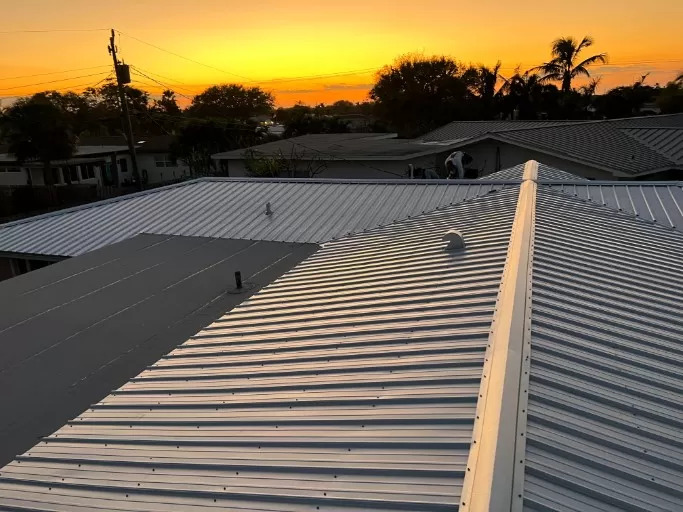
Commercial roofs in Satellite Beach work hard every day. They protect businesses, tenants, equipment, inventory, and interior spaces from Florida’s heat, rain, wind, and salt-heavy coastal air. Because many commercial roofs are flat or low-slope, problems are not always obvious from the ground. A small seam issue, puncture, clogged drain, or flashing gap can quietly allow moisture into the roof system long before water appears indoors.
Many commercial roofing problems Florida property owners face begin as minor maintenance concerns. When they are ignored, they can lead to interior leaks, damaged insulation, mold concerns, business interruptions, and costly repairs. The best way to protect a commercial property is to understand where roof problems usually start and how to prevent them before they spread.
Why Satellite Beach Commercial Roofs Face Unique Challenges
Satellite Beach properties are exposed to a demanding coastal environment. Salt air can speed up corrosion on metal flashing, fasteners, rooftop supports, and mechanical equipment. High humidity can slow drying after rain, which gives moisture more time to affect weak areas. Strong sunlight can age sealants, coatings, and exposed materials over time.
Commercial buildings also tend to have more rooftop details than residential roofs. HVAC units, vents, drains, skylights, curbs, scuppers, and wall transitions all create areas where water can enter if materials loosen or deteriorate. These coastal roofing issues make routine inspections especially important for local business owners and property managers.
How Coastal Weather Affects Commercial Roofing Systems
Coastal weather creates constant expansion and contraction. Roofing materials heat up during the day, cool down at night, and move slightly through each cycle. Over time, this movement can strain seams, flashing, sealants, and edges.
Satellite Beach also experiences heavy rainfall and wind-driven storms. Even when a storm is not severe, rain can push into small roof openings when wind hits at the right angle. Debris can collect in drains or valleys, and standing water can place extra stress on the roof surface. A roof that performs well during light rain may still fail during stronger coastal weather.
Ponding Water on Flat and Low-Slope Roofs
Flat and low-slope commercial roofs are designed to move water toward drains, gutters, or scuppers. When water remains on the surface after rain, it can weaken roofing materials and increase the chance of leaks. A ponding water flat roof issue may be caused by clogged drains, poor slope, compressed insulation, structural settling, or blocked drainage paths.
Standing water should never be treated as normal. It can add weight to the roof, accelerate membrane wear, and make existing small defects worse. Preventing this problem starts with keeping drains clear, removing debris, and having a roofing professional evaluate recurring low spots.
Membrane Punctures and Surface Damage
Commercial roof membranes are durable, but they can still be punctured or worn down. Foot traffic, dropped tools, storm debris, and rooftop service work can all damage the surface. A small puncture may look minor, but it can allow water into the insulation or roof deck.
Roof membrane damage Florida businesses experience is often tied to both weather and maintenance activity. HVAC technicians, electricians, and other contractors may need roof access, but repeated traffic without protective walk pads can shorten the life of the membrane. Property owners can prevent damage by limiting unnecessary roof access and scheduling inspections after storms or major rooftop work.
Flashing Deterioration Around Roof Edges and Equipment
Flashing protects vulnerable transitions around roof edges, walls, vents, curbs, drains, and rooftop equipment. When flashing cracks, loosens, corrodes, or separates, water can enter even if the main roof surface looks intact.
In Satellite Beach, salt air and wind exposure can make flashing deterioration happen faster. Sealants around flashing may also dry out or pull away over time. Preventive maintenance should always include close inspection of flashing details, especially around HVAC curbs and roof edges where water intrusion often begins.
Seam Separation on Commercial Roofing Systems
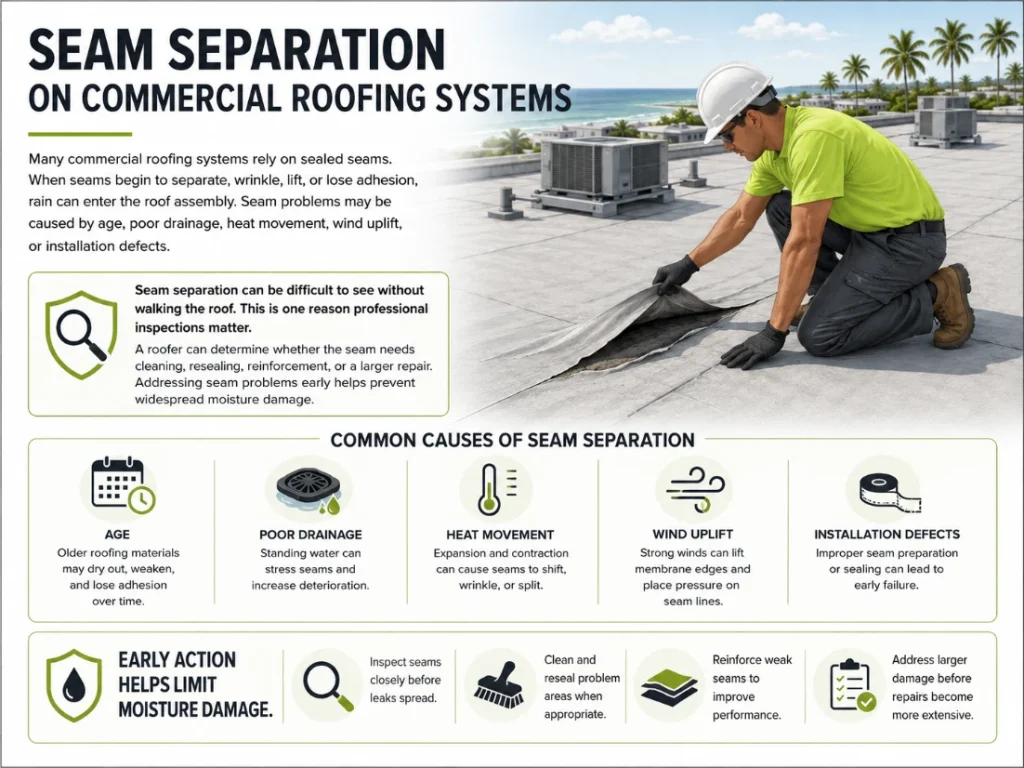
Many commercial roofing systems rely on sealed seams. When seams begin to separate, wrinkle, lift, or lose adhesion, rain can enter the roof assembly. Seam problems may be caused by age, poor drainage, heat movement, wind uplift, or installation defects.
Seam separation can be difficult to see without walking the roof. This is one reason professional inspections matter. A roofer can determine whether the seam needs cleaning, resealing, reinforcement, or a larger repair. Addressing seam problems early helps prevent widespread moisture damage.
Clogged Drains, Gutters, and Scuppers
Drainage problems are one of the most preventable causes of commercial roof damage. Leaves, sand, roofing granules, branches, trash, and storm debris can block drains, gutters, and scuppers. Once water cannot move off the roof properly, it can back up beneath edges, around equipment, or across weak sections of the roof.
In Florida storms, blocked drainage can become a serious issue quickly. Property owners should have drainage systems checked regularly, especially before and during hurricane season. Clear drains are a simple but important part of protecting commercial roofs.
UV Damage from Florida Sun Exposure
Florida sunlight can be harsh on commercial roofing materials. UV exposure can dry out sealants, weaken coatings, fade surfaces, and make some materials brittle. Heat also increases movement in the roof system, which can strain seams and flashing.
A roof with UV damage may show cracking, blistering, chalking, or surface wear. Reflective coatings and regular maintenance can help reduce heat-related deterioration. Property owners should also watch for signs that the roof surface is losing its protective qualities.
Wind Damage from Storms and Coastal Gusts
Strong wind can lift roof edges, loosen flashing, move debris, damage rooftop equipment, and create openings where rain can enter. Wind damage is not always obvious from the ground. A roof may look secure while still having lifted seams, loose coping, or damaged termination points.
After a strong coastal storm, commercial property owners should schedule an inspection even if there is no visible leak. Finding storm damage early can prevent water intrusion during the next rainfall.
Moisture Intrusion and Hidden Leaks
Hidden leaks are especially costly because water can travel through the roof system before showing up inside. By the time ceiling stains, musty odors, or damaged tiles appear, moisture may already have affected insulation, decking, drywall, or interior finishes.
Roof membrane damage Florida property owners catch early is usually easier to repair than moisture damage that has spread beneath the surface. Interior warning signs should always be investigated quickly, especially after heavy rain or wind-driven storms.
Roof Damage Around HVAC Units and Rooftop Equipment
Commercial roofs often support HVAC units, vents, exhaust systems, and other rooftop equipment. These areas are common leak points because they involve curbs, penetrations, flashing, fasteners, and sealants. Service work around equipment can also create surface damage if crews are not careful.
Regular inspections should include equipment curbs, drain areas near units, surrounding membrane surfaces, and any high-traffic paths. Walk pads can help protect areas that maintenance teams access often.
Preventive Maintenance for Satellite Beach Commercial Properties
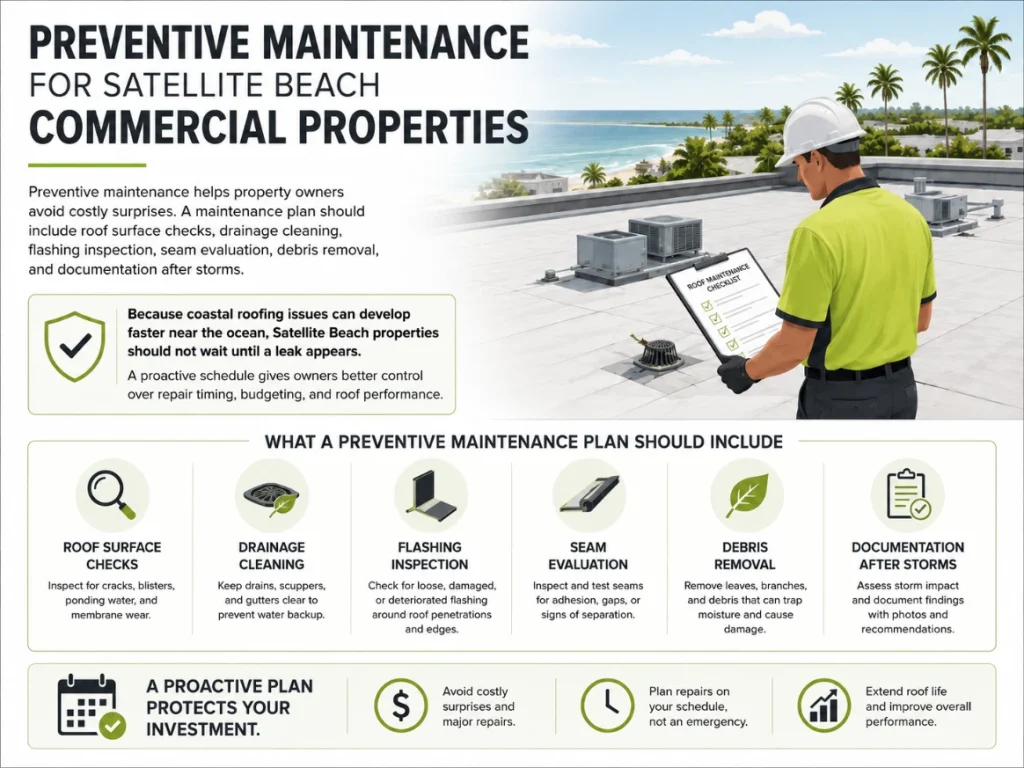
Preventive maintenance helps property owners avoid costly surprises. A maintenance plan should include roof surface checks, drainage cleaning, flashing inspection, seam evaluation, debris removal, and documentation after storms.
Because coastal roofing issues can develop faster near the ocean, Satellite Beach properties should not wait until a leak appears. A proactive schedule gives owners better control over repair timing, budgeting, and roof performance.
Why Routine Commercial Roof Inspections Matter
Routine inspections help identify small issues before they become expensive repairs. A professional roofer can spot ponding, punctures, seam separation, flashing failure, clogged drains, UV wear, and hidden moisture concerns.
Inspections also give property owners a clearer picture of roof condition. Instead of reacting to emergencies, they can make informed repair decisions and plan ahead for long-term roofing needs.
When to Repair Commercial Roofing Problems Before They Spread
Commercial roof problems should be repaired when they begin affecting water resistance, drainage, or structural protection. Small punctures, loose flashing, clogged drains, and minor seam issues are often manageable when addressed early.
Waiting too long can allow moisture to spread into insulation or decking. Repairs are usually easier to control before the next major storm arrives.
Protect Your Satellite Beach Commercial Property with DC Roofing Inc.
Your commercial roof protects far more than the building itself. It protects daily operations, employees, tenants, inventory, and long-term property value. DC Roofing Inc. helps Satellite Beach commercial property owners identify roof concerns early and make confident repair decisions.
FAQs About Commercial Roofing Problems in Florida
What are the most common commercial roofing problems in Satellite Beach?
The most common issues include drainage problems, membrane punctures, flashing deterioration, seam separation, UV damage, wind damage, and hidden leaks. Because Satellite Beach properties face salt air, humidity, heavy rain, and coastal storms, these problems can worsen quickly without regular inspections and maintenance.
Why is standing water dangerous on a commercial flat roof?
A ponding water flat roof concern can weaken roofing materials, add weight to the structure, encourage surface deterioration, and increase leak risk. Standing water may also point to clogged drains, poor slope, or compressed insulation. If it happens repeatedly, a professional inspection is recommended.
How often should a commercial roof be inspected in coastal Florida?
Commercial roofs in coastal Florida should generally be inspected at least twice a year, with additional inspections after strong storms. Regular inspections help property owners catch small issues early, protect interior spaces, and avoid emergency repairs caused by hidden damage.
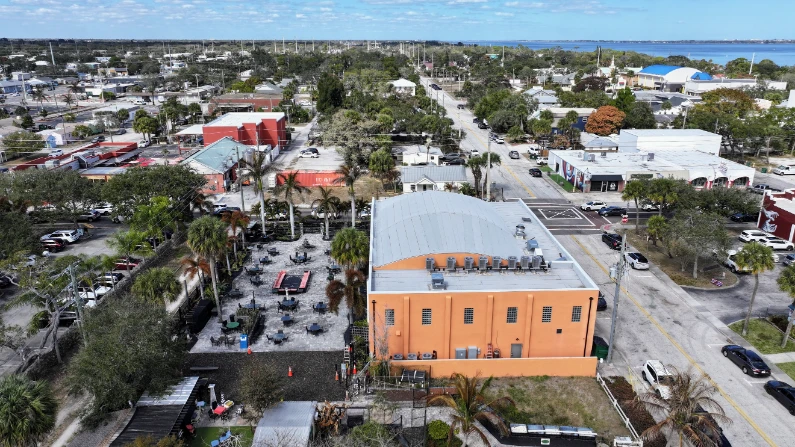
Prevent Commercial Roofing Problems Florida Businesses Can’t Afford to Ignore with DC Roofing Inc.
In Satellite Beach’s coastal climate, even a small roofing issue can quickly become a costly threat to your building, tenants, equipment, and daily operations. Damaged flashing, clogged drains, membrane punctures, ponding water, and hidden leaks should be addressed before the next heavy rain or coastal storm makes the damage worse. DC Roofing Inc. provides professional commercial roof inspections and repair solutions to help property owners catch problems early and protect their investment with confidence. Contact DC Roofing Inc. today to schedule your commercial roof inspection and take the next step toward a safer, stronger, and better-protected property.